Author Archives: Robins

An error is reported when executing MVN. The diamond operator is not supported in source-1.5

Specify the version of Maven and the JDK version used by Maven

Modify in pom.xml

<project xmlns="...">
    ...
    <build>
        <plugins>
            <plugin>
                <groupId>org.apache.maven.plugins</groupId>
                <artifactId>maven-compiler-plugin</artifactId>
                <version>3.3</version>
                <configuration>
                    <source>1.8</source>
                    <target>1.8</target>
                </configuration>
            </plugin>
        </plugins>
    </build>
    ...
</project>

An error is reported when passing data pages using Ajax: Vue is not defined

1、 Resolution:

Literal meaning: Vue is not defined, that is, the introduction of Vue source code;

2、 Try to resolve:

1: Try 1: check whether the Vue source code import (path and script tag) is wrong
2: try 2: there is no problem with the import syntax, that is, check whether there is a Vue source code file in the target folder, and find no (reason: I added the Vue source code file manually later, but it was not generated in time in the target)

3、 Solution steps:

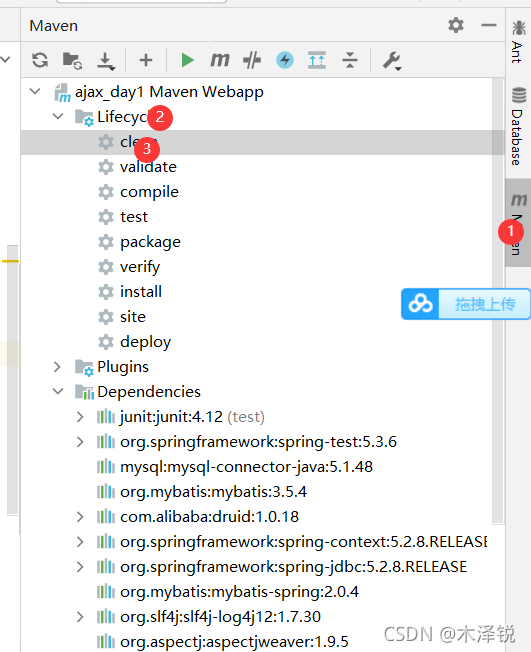
Click clean to clean and regenerate the target file. The Vue source code is successfully introduced and the error is resolved;

Screenshot:

Solve the problem of docker error: Unsupported compose file version: 3.2

The following error occurred when using docker to deploy the project today:

unsupported Compose file version: 3.2

It seems that there is a version problem by searching the data:
https://stackoverflow.com/questions/58007968/unsupported-compose-file-version-x-x

Solution:
upgrade the docker and docker compose versions to the latest versions.

When using freemaker template to get values, an error is reported when the attribute is empty

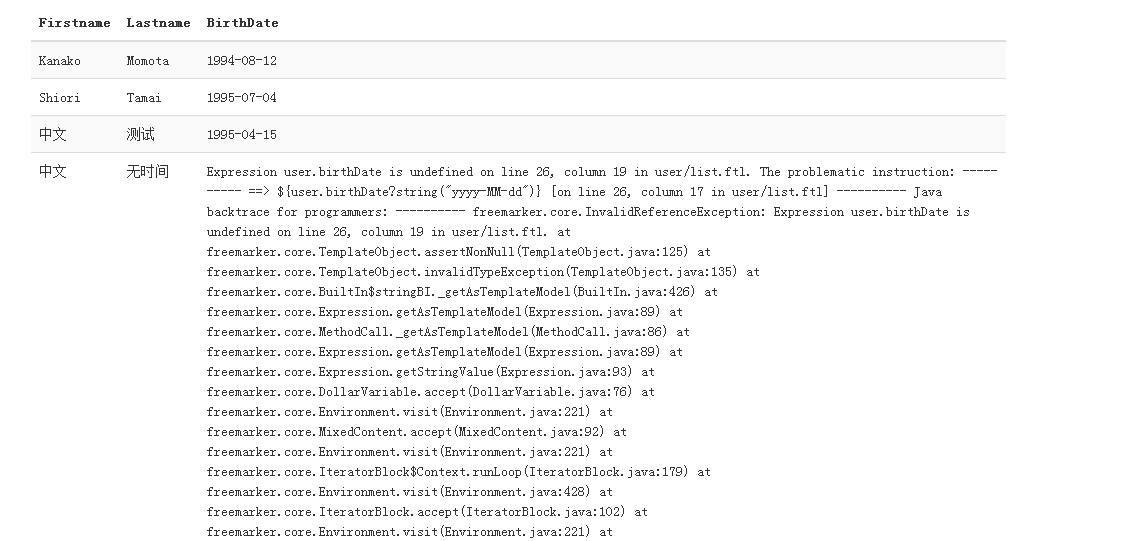
When the expression ${(user. Name)! “} in freemaker is empty, an error is reported directly

FreeMarker is a template engine written in Java language. It generates text output based on the template and uses FreeMarker to judge whether the object is empty.

    general data is judged at the back end, and the front end only displays it regardless of logic. Freemaker displays that an object uses ${name}.
    but if the name is null, freemaker will report an error. If you need to judge whether the object is empty: & lt; #if name?& gt;… & lt;/#if & gt;. You can also set the default value ${name! “”} To avoid the error that the object is empty. If the name is empty, it will be displayed with the default value (the character after “!”). The object user and name are the attributes of user. At this time, both user and name may be empty, which can be written as ${(user. Name)! “”}, indicating that user or name is null, which will be displayed as empty.


An error occurs when HBase uses the shell command: pleaseholdexception: Master is initializing solution

Article catalog

Project scenario: Problem Description: Cause Analysis: solution:


Project scenario:

Ubuntu20.04Hadoop3.2.2Hbase2.2.2


Problem Description:

The main errors are as follows: error: org.apache.hadoop.hbase.pleaseholdexception: Master is initializing

After starting the HBase shell, when using create, list and other commands, the following error messages appear:

hbase(main):001:0> list
TABLE 
                                                                                                                    
ERROR: org.apache.hadoop.hbase.PleaseHoldException: Master is initializing
        at org.apache.hadoop.hbase.master.HMaster.checkInitialized(HMaster.java:2452)
        at org.apache.hadoop.hbase.master.MasterRpcServices.getTableNames(MasterRpcServices.java:915)
        at org.apache.hadoop.hbase.protobuf.generated.MasterProtos$MasterService$2.callBlockingMethod(MasterProtos.java:58517)
        at org.apache.hadoop.hbase.ipc.RpcServer.call(RpcServer.java:2339)
        at org.apache.hadoop.hbase.ipc.CallRunner.run(CallRunner.java:123)
        at org.apache.hadoop.hbase.ipc.RpcExecutor$Handler.run(RpcExecutor.java:188)
        at org.apache.hadoop.hbase.ipc.RpcExecutor$Handler.run(RpcExecutor.java:168)

For usage try 'help "list"'

Took 10.297 seconds

Cause analysis:

Here, my computer is only configured with HBase application for Hadoop pseudo distributed cluster, so I don’t think it’s possible that the time of HBase and zookeeper servers is inconsistent, as others on the Internet say. The main reason should be: the processes of Hadoop and HBase are inconsistent, resulting in the initialization of the master node all the time


Solution:

Format the HBase file system in Hadoop, restart HBase, and resynchronize the two:

Shut down all HBase services first:

cd /usr/local/hbase
bin/stop-hbase.sh

Then close all Hadoop services:

cd /usr/local/hadoop
sbin/stop-all.sh

Enter JPS to ensure that all Hadoop and HBase processes are closed:

zq@fzqs-Laptop:~$ jps
4673 Jps

Then start the Hadoop service:

cd /usr/local/hadoop
sbin/start-all.sh

To view files in HDFS:

bin/hdfs dfs -ls /

The output shall be as follows (including/HBase):

zq@fzqs-Laptop:/usr/local/hadoop$ bin/hdfs dfs -ls /
Found 1 items
drwxr-xr-x		- root supergroup 		0 2021-10-28 21:49 /hbase

Delete/HBase Directory:

bin/hdfs dfs -rm -r /hbase

Start HBase service:

cd /usr/local/hbase
bin/start-hbase.sh

Then start the shell and you should be able to use it:

bin/hbase shell

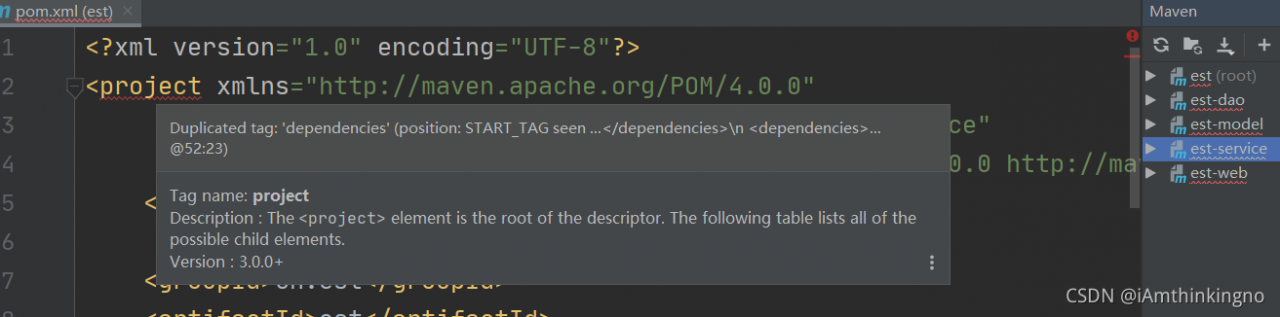
The project tag in the parent project POM file of Maven multi module project reports an error, and the error information is: \n

Error message

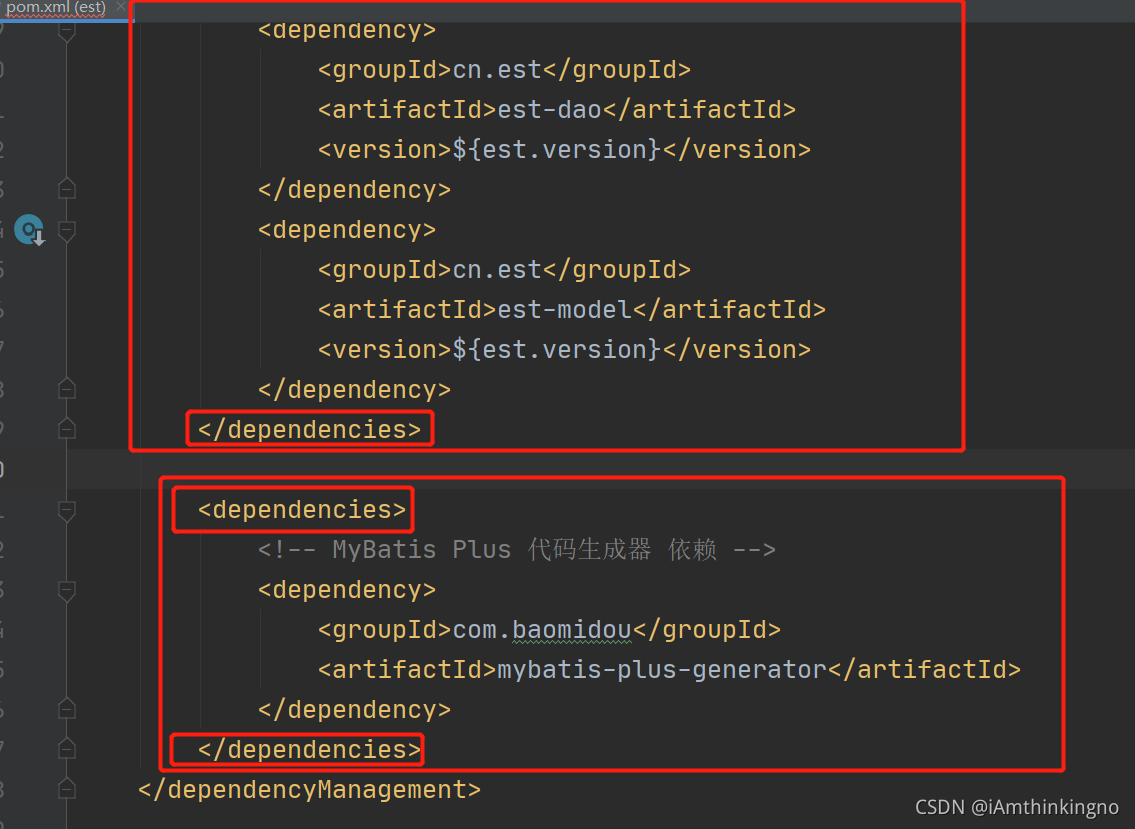
Reason: under the dependency management tab in the parent project POM file  <dependencies></dependencies> There are multiple. One is version control dependency, and the other is introduced dependency

Solution:

Add POM file

The dependencies are placed in the dependencies tab. The dependency of version control is placed under the dependency management tab In dependencies.

Note: it’s just to record some mistakes that are easy to ignore or imperceptible.

Resolve the error raise importerror, str (MSG) + ‘, please install the python TK package’ (valid for personal testing)

Solve the following similar error reports:

Traceback (most recent call last):
  File "<stdin>", line 1, in <module>
  File "/usr/lib/python2.7/lib-tk/Tkinter.py", line 42, in <module>
    raise ImportError, str(msg) + ', please install the python-tk package'
ImportError: /usr/lib/libtk8.5.so.0: invalid ELF header, please install the python-tk package

terms of settlement:

It appears that the library is corrupted
try sudo apt get remove Python TK ,
then sudo apt get clean download the package again,
sudo apt get install Python TK and then try importing again
this problem is resolved.

Another possibility is that you somehow messed up your apt/sources. List, and you installed a library for the wrong platform.

Reference link:
https://stackoverflow.com/questions/11043844/python-tk-package-not-recognized-in-python-2-7-3

Solve the runtimeerror in RNN: expected scalar type long but found float error

Project scenario:

Today, I saw the code of an RNN instance. I want to try to pass in RNN with my own data, but I can report an error.

Problem Description:

The error is runtimeerror: expected scalar type long but found float


Cause analysis:

The wrong input is as follows:

input=torch.tensor([ 0,  0,  0,  0,  0,  0,  0, 1, 0, 0, 0, 0, 0, 0, 0, 0, 0, 0, 
         0,  0,  0,  0,  0,  0,  0,  0,  0,  0,  0,  0,  0,  0,  0,  0,  0,  0,
         0,  0,  0,  0,  0,  0,  0,  0,  0,  0,  0,  0,  0,  0,  0,  0,  0,  0,
         0,  0,  0,  0,  0,  0,  0,  0,  0,  0,  0,  0,  0,  0,  0,  0,  0,  0,
         0,  0,  0,  0,  0,  0,  0,  0,  0,  0,  0,  0,  0,  0,  0,  0,  0,  0,
         0,  0,  0,  0,  0,  0])

The input in the example is as follows:

input=torch.tensor([[0., 0., 0., 0., 0., 0., 0., 0., 0., 0., 0., 0., 0., 0., 0., 0., 0., 0.,0., 0., 0., 0., 0., 0., 0., 0., 0., 1., 0., 0., 0., 0., 0., 0., 0., 0.,0., 0., 0., 0., 0., 0., 0., 0., 0., 0., 0., 0., 0., 0., 0., 0., 0., 0.,0.]])

The reason is that I set dtype = torch.long when generating input


Solution:

Input = torch. Tensor (input, dtype = torch. Float)
specify dtype = torch. Float when generating the input tensor, and the resulting input will be of the following types

input=torch.tensor([[0., 0., 0., 0., 0., 0., 0., 0., 0., 0., 0., 0., 0., 0., 0., 0., 0., 0.,0., 0., 0., 0., 0., 0., 0., 0., 0., 1., 0., 0., 0., 0., 0., 0., 0., 0.,0., 0., 0., 0., 0., 0., 0., 0., 0., 0., 0., 0., 0., 0., 0., 0., 0., 0.,0.]])

If it meets the requirements, no error will be reported
I didn’t expect to solve this problem. I spent most of the night. I really haven’t started yet. I don’t have enough skills.
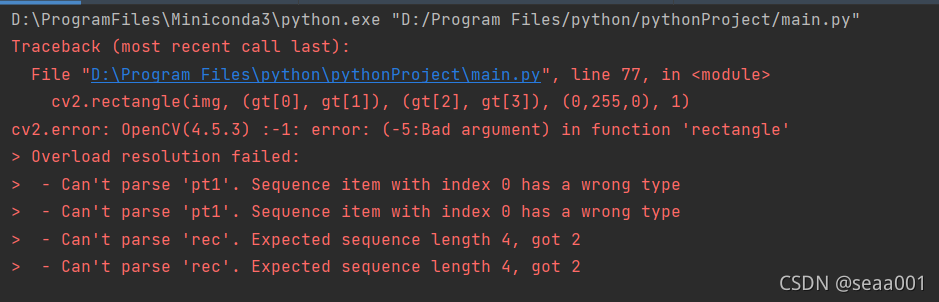
Opencv453 drawing rectangle function error reporting solution

# draw gt
cv2.rectangle(img, (gt[0], gt[1]), (gt[2], gt[3]), (0,255,0), 1)

The following error occurred while running:

The rectangle function in opencv453 is incompatible with floating-point data  

terms of settlement:

It is OK to convert the two coordinate data types in the rectangle function to int

cv2.rectangle(img, (int(gt[0]), int(gt[1])), (int(gt[2]), int(gt[3])),(0,255,0), 1)

Error in reading XML file IOException parsing XML document from URL

The problem is that the constraint at the top of the
XML configuration file refers to“ http://www.springframework.org/dtd/spring-beans.dtd ”
the above address cannot be accessed due to network reasons
solution
download the spring beans.dtd file yourself and put it in the project
change the constraint file path to “classpath:/spring beans. DTD”
the file content is at the end

Error message reading XML configuration file

[org.springframework.web.servlet.DispatcherServlet]Context initialization failed
org.springframework.beans.factory.BeanDefinitionStoreException: IOException parsing XML document from URL [file:/www/****/WEB-INF/classes/****.xml]; nested exception is java.net.ConnectException: Connection timed out (Connection timed out)
        at org.springframework.beans.factory.xml.XmlBeanDefinitionReader.doLoadBeanDefinitions(XmlBeanDefinitionReader.java:409)
        at org.springframework.beans.factory.xml.XmlBeanDefinitionReader.loadBeanDefinitions(XmlBeanDefinitionReader.java:335)
        at org.springframework.beans.factory.xml.XmlBeanDefinitionReader.loadBeanDefinitions(XmlBeanDefinitionReader.java:303)
        at org.springframework.beans.factory.support.AbstractBeanDefinitionReader.loadBeanDefinitions(AbstractBeanDefinitionReader.java:180)
        at org.springframework.beans.factory.support.AbstractBeanDefinitionReader.loadBeanDefinitions(AbstractBeanDefinitionReader.java:216)
        at org.springframework.beans.factory.support.AbstractBeanDefinitionReader.loadBeanDefinitions(AbstractBeanDefinitionReader.java:187)
        at org.springframework.web.context.support.XmlWebApplicationContext.loadBeanDefinitions(XmlWebApplicationContext.java:125)
        at org.springframework.web.context.support.XmlWebApplicationContext.loadBeanDefinitions(XmlWebApplicationContext.java:94)
        at org.springframework.context.support.AbstractRefreshableApplicationContext.refreshBeanFactory(AbstractRefreshableApplicationContext.java:129)
        at org.springframework.context.support.AbstractApplicationContext.obtainFreshBeanFactory(AbstractApplicationContext.java:540)
        at org.springframework.context.support.AbstractApplicationContext.refresh(AbstractApplicationContext.java:454)
        at org.springframework.web.servlet.FrameworkServlet.configureAndRefreshWebApplicationContext(FrameworkServlet.java:658)
        at org.springframework.web.servlet.FrameworkServlet.createWebApplicationContext(FrameworkServlet.java:624)
        at org.springframework.web.servlet.FrameworkServlet.createWebApplicationContext(FrameworkServlet.java:672)
        at org.springframework.web.servlet.FrameworkServlet.initWebApplicationContext(FrameworkServlet.java:543)
        at org.springframework.web.servlet.FrameworkServlet.initServletBean(FrameworkServlet.java:484)
        at org.springframework.web.servlet.HttpServletBean.init(HttpServletBean.java:136)
        at javax.servlet.GenericServlet.init(GenericServlet.java:158)
        at org.apache.catalina.core.StandardWrapper.initServlet(StandardWrapper.java:1152)
        at org.apache.catalina.core.StandardWrapper.loadServlet(StandardWrapper.java:1097)
        at org.apache.catalina.core.StandardWrapper.allocate(StandardWrapper.java:768)
        at org.apache.catalina.core.StandardWrapperValve.invoke(StandardWrapperValve.java:128)
        at org.apache.catalina.core.StandardContextValve.invoke(StandardContextValve.java:97)
        at org.apache.catalina.authenticator.AuthenticatorBase.invoke(AuthenticatorBase.java:544)
        at org.apache.catalina.core.StandardHostValve.invoke$original$JBhkMTsZ(StandardHostValve.java:135)
        at org.apache.catalina.core.StandardHostValve.invoke$original$JBhkMTsZ$accessor$Aediq7SJ(StandardHostValve.java)
        at org.apache.catalina.core.StandardHostValve$auxiliary$qlOZniTF.call(Unknown Source)
        at org.apache.skywalking.apm.agent.core.plugin.interceptor.enhance.InstMethodsInter.intercept(InstMethodsInter.java:86)
        at org.apache.catalina.core.StandardHostValve.invoke(StandardHostValve.java)
        at org.apache.catalina.valves.ErrorReportValve.invoke(ErrorReportValve.java:81)
        at org.apache.catalina.valves.AbstractAccessLogValve.invoke(AbstractAccessLogValve.java:698)
        at org.apache.catalina.core.StandardEngineValve.invoke(StandardEngineValve.java:78)
        at org.apache.catalina.connector.CoyoteAdapter.service(CoyoteAdapter.java:364)
        at org.apache.coyote.http11.Http11Processor.service(Http11Processor.java:624)
        at org.apache.coyote.AbstractProcessorLight.process(AbstractProcessorLight.java:65)
        at org.apache.coyote.AbstractProtocol$ConnectionHandler.process(AbstractProtocol.java:831)
        at org.apache.tomcat.util.net.NioEndpoint$SocketProcessor.doRun(NioEndpoint.java:1650)
        at org.apache.tomcat.util.net.SocketProcessorBase.run(SocketProcessorBase.java:49)
        at org.apache.tomcat.util.threads.ThreadPoolExecutor.runWorker(ThreadPoolExecutor.java:1191)
        at org.apache.tomcat.util.threads.ThreadPoolExecutor$Worker.run(ThreadPoolExecutor.java:659)
        at org.apache.tomcat.util.threads.TaskThread$WrappingRunnable.run(TaskThread.java:61)
        at java.lang.Thread.run(Thread.java:748)
Caused by: java.net.ConnectException: Connection timed out (Connection timed out)
        at java.net.PlainSocketImpl.socketConnect(Native Method)
        at java.net.AbstractPlainSocketImpl.doConnect(AbstractPlainSocketImpl.java:350)
        at java.net.AbstractPlainSocketImpl.connectToAddress(AbstractPlainSocketImpl.java:206)
        at java.net.AbstractPlainSocketImpl.connect(AbstractPlainSocketImpl.java:188)
        at java.net.SocksSocketImpl.connect(SocksSocketImpl.java:392)
        at java.net.Socket.connect(Socket.java:589)
        at java.net.Socket.connect(Socket.java:538)
        at sun.net.NetworkClient.doConnect(NetworkClient.java:180)
        at sun.net.www.http.HttpClient.openServer(HttpClient.java:463)
        at sun.net.www.http.HttpClient.openServer(HttpClient.java:558)
        at sun.net.www.http.HttpClient.<init>(HttpClient.java:242)
        at sun.net.www.http.HttpClient.New(HttpClient.java:339)
        at sun.net.www.http.HttpClient.New(HttpClient.java:357)
        at sun.net.www.protocol.http.HttpURLConnection.getNewHttpClient(HttpURLConnection.java:1220)
        at sun.net.www.protocol.http.HttpURLConnection.plainConnect0(HttpURLConnection.java:1156)
        at sun.net.www.protocol.http.HttpURLConnection.plainConnect(HttpURLConnection.java:1050)
        at sun.net.www.protocol.http.HttpURLConnection.connect(HttpURLConnection.java:984)
        at sun.net.www.protocol.http.HttpURLConnection.getInputStream0(HttpURLConnection.java:1564)
        at sun.net.www.protocol.http.HttpURLConnection.getInputStream(HttpURLConnection.java:1492)
        at com.sun.org.apache.xerces.internal.impl.XMLEntityManager.setupCurrentEntity(XMLEntityManager.java:647)
        at com.sun.org.apache.xerces.internal.impl.XMLEntityManager.startEntity(XMLEntityManager.java:1304)
        at com.sun.org.apache.xerces.internal.impl.XMLEntityManager.startDTDEntity(XMLEntityManager.java:1270)
        at com.sun.org.apache.xerces.internal.impl.XMLDTDScannerImpl.setInputSource(XMLDTDScannerImpl.java:264)
        at com.sun.org.apache.xerces.internal.impl.XMLDocumentScannerImpl$DTDDriver.dispatch(XMLDocumentScannerImpl.java:1161)
        at com.sun.org.apache.xerces.internal.impl.XMLDocumentScannerImpl$DTDDriver.next(XMLDocumentScannerImpl.java:1045)
        at com.sun.org.apache.xerces.internal.impl.XMLDocumentScannerImpl$PrologDriver.next(XMLDocumentScannerImpl.java:959)
        at com.sun.org.apache.xerces.internal.impl.XMLDocumentScannerImpl.next(XMLDocumentScannerImpl.java:602)
        at com.sun.org.apache.xerces.internal.impl.XMLDocumentFragmentScannerImpl.scanDocument(XMLDocumentFragmentScannerImpl.java:505)
        at com.sun.org.apache.xerces.internal.parsers.XML11Configuration.parse(XML11Configuration.java:841)
        at com.sun.org.apache.xerces.internal.parsers.XML11Configuration.parse(XML11Configuration.java:770)
        at com.sun.org.apache.xerces.internal.parsers.XMLParser.parse(XMLParser.java:141)
        at com.sun.org.apache.xerces.internal.parsers.DOMParser.parse(DOMParser.java:243)
        at com.sun.org.apache.xerces.internal.jaxp.DocumentBuilderImpl.parse(DocumentBuilderImpl.java:339)
        at org.springframework.beans.factory.xml.DefaultDocumentLoader.loadDocument(DefaultDocumentLoader.java:76)
        at org.springframework.beans.factory.xml.XmlBeanDefinitionReader.doLoadDocument(XmlBeanDefinitionReader.java:428)
        at org.springframework.beans.factory.xml.XmlBeanDefinitionReader.doLoadBeanDefinitions(XmlBeanDefinitionReader.java:390)
        ... 41 more

Spring-beans.dtd content

<!--
	Spring XML Beans DTD, version 1.2
	Authors: Rod Johnson, Juergen Hoeller, Alef Arendsen, Colin Sampaleanu, Rob Harrop

	This defines a simple and consistent way of creating a namespace
	of JavaBeans objects, managed by a Spring BeanFactory, read by
	XmlBeanDefinitionReader (with DefaultBeanDefinitionDocumentReader).

	This document type is used by most Spring functionality, including
	web application contexts, which are based on bean factories.

	Each "bean" element in this document defines a JavaBean.
	Typically the bean class is specified, along with JavaBean properties
	and/or constructor arguments.

	Bean instances can be "singletons" (shared instances) or "prototypes"
	(independent instances). Further scopes are supposed to be built on top
	of the core BeanFactory infrastructure and are therefore not part of it.

	References among beans are supported, that is, setting a JavaBean property
	or a constructor argument to refer to another bean in the same factory
	(or an ancestor factory).

	As alternative to bean references, "inner bean definitions" can be used.
	Singleton flags of such inner bean definitions are effectively ignored:
	Inner beans are typically anonymous prototypes.

	There is also support for lists, sets, maps, and java.util.Properties
	as bean property types or constructor argument types.

	For simple purposes, this DTD is sufficient. As of Spring 2.0,
	XSD-based bean definitions are supported as more powerful alternative.

	XML documents that conform to this DTD should declare the following doctype:

	<!DOCTYPE beans PUBLIC "-//SPRING//DTD BEAN//EN"
		"http://www.springframework.org/dtd/spring-beans.dtd">
-->


<!--
	The document root. A document can contain bean definitions only,
	imports only, or a mixture of both (typically with imports first).
-->
<!ELEMENT beans (
	description?,
	(import | alias | bean)*
)>

<!--
	Default values for all bean definitions. Can be overridden at
	the "bean" level. See those attribute definitions for details.
-->
<!ATTLIST beans default-lazy-init (true | false) "false">
<!ATTLIST beans default-autowire (no | byName | byType | constructor | autodetect) "no">
<!ATTLIST beans default-dependency-check (none | objects | simple | all) "none">
<!ATTLIST beans default-init-method CDATA #IMPLIED>
<!ATTLIST beans default-destroy-method CDATA #IMPLIED>

<!--
	Element containing informative text describing the purpose of the enclosing
	element. Always optional.
	Used primarily for user documentation of XML bean definition documents.
-->
<!ELEMENT description (#PCDATA)>


<!--
	Specifies an XML bean definition resource to import.
-->
<!ELEMENT import EMPTY>

<!--
	The relative resource location of the XML bean definition file to import,
	for example "myImport.xml" or "includes/myImport.xml" or "../myImport.xml".
-->
<!ATTLIST import resource CDATA #REQUIRED>


<!--
	Defines an alias for a bean, which can reside in a different definition file.
-->
<!ELEMENT alias EMPTY>

<!--
	The name of the bean to define an alias for.
-->
<!ATTLIST alias name CDATA #REQUIRED>

<!--
	The alias name to define for the bean.
-->
<!ATTLIST alias alias CDATA #REQUIRED>


<!--
	Defines a single (usually named) bean.

	A bean definition may contain nested tags for constructor arguments,
	property values, lookup methods, and replaced methods. Mixing constructor
	injection and setter injection on the same bean is explicitly supported.
-->
<!ELEMENT bean (
	description?,
	(constructor-arg | property | lookup-method | replaced-method)*
)>

<!--
	Beans can be identified by an id, to enable reference checking.

	There are constraints on a valid XML id: if you want to reference your bean
	in Java code using a name that's illegal as an XML id, use the optional
	"name" attribute. If neither is given, the bean class name is used as id
	(with an appended counter like "#2" if there is already a bean with that name).
-->
<!ATTLIST bean id ID #IMPLIED>

<!--
	Optional. Can be used to create one or more aliases illegal in an id.
	Multiple aliases can be separated by any number of spaces, commas, or
	semi-colons (or indeed any mixture of the three).
-->
<!ATTLIST bean name CDATA #IMPLIED>

<!--
	Each bean definition must specify the fully qualified name of the class,
	except if it pure serves as parent for child bean definitions.
-->
<!ATTLIST bean class CDATA #IMPLIED>

<!--
	Optionally specify a parent bean definition.

	Will use the bean class of the parent if none specified, but can
	also override it. In the latter case, the child bean class must be
	compatible with the parent, i.e. accept the parent's property values
	and constructor argument values, if any.

	A child bean definition will inherit constructor argument values,
	property values and method overrides from the parent, with the option
	to add new values. If init method, destroy method, factory bean and/or factory
	method are specified, they will override the corresponding parent settings.

	The remaining settings will always be taken from the child definition:
	depends on, autowire mode, dependency check, singleton, lazy init.
-->
<!ATTLIST bean parent CDATA #IMPLIED>

<!--
	Is this bean "abstract", i.e. not meant to be instantiated itself but
	rather just serving as parent for concrete child bean definitions.
	Default is "false". Specify "true" to tell the bean factory to not try to
	instantiate that particular bean in any case.

	Note: This attribute will not be inherited by child bean definitions.
	Hence, it needs to be specified per concrete bean definition.
-->
<!ATTLIST bean abstract (true | false) #IMPLIED>

<!--
	Is this bean a "singleton" (one shared instance, which will
	be returned by all calls to getBean() with the id),
	or a "prototype" (independent instance resulting from each call to
	getBean(). Default is singleton.

	Singletons are most commonly used, and are ideal for multi-threaded
	service objects.

	Note: This attribute will not be inherited by child bean definitions.
	Hence, it needs to be specified per concrete bean definition.
-->
<!ATTLIST bean singleton (true | false) #IMPLIED>

<!--
	If this bean should be lazily initialized.
	If false, it will get instantiated on startup by bean factories
	that perform eager initialization of singletons.

	Note: This attribute will not be inherited by child bean definitions.
	Hence, it needs to be specified per concrete bean definition.
-->
<!ATTLIST bean lazy-init (true | false | default) "default">

<!--
	Optional attribute controlling whether to "autowire" bean properties.
	This is an automagical process in which bean references don't need to be coded
	explicitly in the XML bean definition file, but Spring works out dependencies.

	There are 5 modes:

	1. "no"
	The traditional Spring default. No automagical wiring. Bean references
	must be defined in the XML file via the <ref> element. We recommend this
	in most cases as it makes documentation more explicit.

	2. "byName"
	Autowiring by property name. If a bean of class Cat exposes a dog property,
	Spring will try to set this to the value of the bean "dog" in the current factory.
	If there is no matching bean by name, nothing special happens;
	use dependency-check="objects" to raise an error in that case.

	3. "byType"
	Autowiring if there is exactly one bean of the property type in the bean factory.
	If there is more than one, a fatal error is raised, and you can't use byType
	autowiring for that bean. If there is none, nothing special happens;
	use dependency-check="objects" to raise an error in that case.

	4. "constructor"
	Analogous to "byType" for constructor arguments. If there isn't exactly one bean
	of the constructor argument type in the bean factory, a fatal error is raised.

	5. "autodetect"
	Chooses "constructor" or "byType" through introspection of the bean class.
	If a default constructor is found, "byType" gets applied.

	The latter two are similar to PicoContainer and make bean factories simple to
	configure for small namespaces, but doesn't work as well as standard Spring
	behaviour for bigger applications.

	Note that explicit dependencies, i.e. "property" and "constructor-arg" elements,
	always override autowiring. Autowire behavior can be combined with dependency
	checking, which will be performed after all autowiring has been completed.

	Note: This attribute will not be inherited by child bean definitions.
	Hence, it needs to be specified per concrete bean definition.
-->
<!ATTLIST bean autowire (no | byName | byType | constructor | autodetect | default) "default">

<!--
	Optional attribute controlling whether to check whether all this
	beans dependencies, expressed in its properties, are satisfied.
	Default is no dependency checking.

	"simple" type dependency checking includes primitives and String
	"object" includes collaborators (other beans in the factory)
	"all" includes both types of dependency checking

	Note: This attribute will not be inherited by child bean definitions.
	Hence, it needs to be specified per concrete bean definition.
-->
<!ATTLIST bean dependency-check (none | objects | simple | all | default) "default">

<!--
	The names of the beans that this bean depends on being initialized.
	The bean factory will guarantee that these beans get initialized before.

	Note that dependencies are normally expressed through bean properties or
	constructor arguments. This property should just be necessary for other kinds
	of dependencies like statics (*ugh*) or database preparation on startup.

	Note: This attribute will not be inherited by child bean definitions.
	Hence, it needs to be specified per concrete bean definition.
-->
<!ATTLIST bean depends-on CDATA #IMPLIED>

<!--
	Optional attribute for the name of the custom initialization method
	to invoke after setting bean properties. The method must have no arguments,
	but may throw any exception.
-->
<!ATTLIST bean init-method CDATA #IMPLIED>

<!--
	Optional attribute for the name of the custom destroy method to invoke
	on bean factory shutdown. The method must have no arguments,
	but may throw any exception. Note: Only invoked on singleton beans!
-->
<!ATTLIST bean destroy-method CDATA #IMPLIED>

<!--
	Optional attribute specifying the name of a factory method to use to
	create this object. Use constructor-arg elements to specify arguments
	to the factory method, if it takes arguments. Autowiring does not apply
	to factory methods.

	If the "class" attribute is present, the factory method will be a static
	method on the class specified by the "class" attribute on this bean
	definition. Often this will be the same class as that of the constructed
	object - for example, when the factory method is used as an alternative
	to a constructor. However, it may be on a different class. In that case,
	the created object will *not* be of the class specified in the "class"
	attribute. This is analogous to FactoryBean behavior.

	If the "factory-bean" attribute is present, the "class" attribute is not
	used, and the factory method will be an instance method on the object
	returned from a getBean call with the specified bean name. The factory
	bean may be defined as a singleton or a prototype.

	The factory method can have any number of arguments. Autowiring is not
	supported. Use indexed constructor-arg elements in conjunction with the
	factory-method attribute.

	Setter Injection can be used in conjunction with a factory method.
	Method Injection cannot, as the factory method returns an instance,
	which will be used when the container creates the bean.
-->
<!ATTLIST bean factory-method CDATA #IMPLIED>

<!--
	Alternative to class attribute for factory-method usage.
	If this is specified, no class attribute should be used.
	This should be set to the name of a bean in the current or
	ancestor factories that contains the relevant factory method.
	This allows the factory itself to be configured using Dependency
	Injection, and an instance (rather than static) method to be used.
-->
<!ATTLIST bean factory-bean CDATA #IMPLIED>


<!--
	Bean definitions can specify zero or more constructor arguments.
	This is an alternative to "autowire constructor".
	Arguments correspond to either a specific index of the constructor argument
	list or are supposed to be matched generically by type.

	Note: A single generic argument value will just be used once, rather than
	potentially matched multiple times (as of Spring 1.1).

	constructor-arg elements are also used in conjunction with the factory-method
	element to construct beans using static or instance factory methods.
-->
<!ELEMENT constructor-arg (
	description?,
	(bean | ref | idref | value | null | list | set | map | props)?
)>

<!--
	The constructor-arg tag can have an optional index attribute,
	to specify the exact index in the constructor argument list. Only needed
	to avoid ambiguities, e.g. in case of 2 arguments of the same type.
-->
<!ATTLIST constructor-arg index CDATA #IMPLIED>

<!--
	The constructor-arg tag can have an optional type attribute,
	to specify the exact type of the constructor argument. Only needed
	to avoid ambiguities, e.g. in case of 2 single argument constructors
	that can both be converted from a String.
-->
<!ATTLIST constructor-arg type CDATA #IMPLIED>

<!--
  A short-cut alternative to a child element "ref bean=".
-->
<!ATTLIST constructor-arg ref CDATA #IMPLIED>

<!--
  A short-cut alternative to a child element "value".
-->
<!ATTLIST constructor-arg value CDATA #IMPLIED>


<!--
	Bean definitions can have zero or more properties.
	Property elements correspond to JavaBean setter methods exposed
	by the bean classes. Spring supports primitives, references to other
	beans in the same or related factories, lists, maps and properties.
-->
<!ELEMENT property (
	description?,
	(bean | ref | idref | value | null | list | set | map | props)?
)>

<!--
	The property name attribute is the name of the JavaBean property.
	This follows JavaBean conventions: a name of "age" would correspond
	to setAge()/optional getAge() methods.
-->
<!ATTLIST property name CDATA #REQUIRED>

<!--
  A short-cut alternative to a child element "ref bean=".
-->
<!ATTLIST property ref CDATA #IMPLIED>

<!--
  A short-cut alternative to a child element "value".
-->
<!ATTLIST property value CDATA #IMPLIED>


<!--
	A lookup method causes the IoC container to override the given method and return
	the bean with the name given in the bean attribute. This is a form of Method Injection.
	It's particularly useful as an alternative to implementing the BeanFactoryAware
	interface, in order to be able to make getBean() calls for non-singleton instances
	at runtime. In this case, Method Injection is a less invasive alternative.
-->
<!ELEMENT lookup-method EMPTY>

<!--
	Name of a lookup method. This method should take no arguments.
-->
<!ATTLIST lookup-method name CDATA #IMPLIED>

<!--
	Name of the bean in the current or ancestor factories that the lookup method
	should resolve to. Often this bean will be a prototype, in which case the
	lookup method will return a distinct instance on every invocation. This
	is useful for single-threaded objects.
-->
<!ATTLIST lookup-method bean CDATA #IMPLIED>


<!--
	Similar to the lookup method mechanism, the replaced-method element is used to control
	IoC container method overriding: Method Injection. This mechanism allows the overriding
	of a method with arbitrary code.
-->
<!ELEMENT replaced-method (
	(arg-type)*
)>

<!--
	Name of the method whose implementation should be replaced by the IoC container.
	If this method is not overloaded, there's no need to use arg-type subelements.
	If this method is overloaded, arg-type subelements must be used for all
	override definitions for the method.
-->
<!ATTLIST replaced-method name CDATA #IMPLIED>

<!--
	Bean name of an implementation of the MethodReplacer interface
	in the current or ancestor factories. This may be a singleton or prototype
	bean. If it's a prototype, a new instance will be used for each method replacement.
	Singleton usage is the norm.
-->
<!ATTLIST replaced-method replacer CDATA #IMPLIED>

<!--
	Subelement of replaced-method identifying an argument for a replaced method
	in the event of method overloading.
-->
<!ELEMENT arg-type (#PCDATA)>

<!--
	Specification of the type of an overloaded method argument as a String.
	For convenience, this may be a substring of the FQN. E.g. all the
	following would match "java.lang.String":
	- java.lang.String
	- String
	- Str

	As the number of arguments will be checked also, this convenience can often
	be used to save typing.
-->
<!ATTLIST arg-type match CDATA #IMPLIED>


<!--
	Defines a reference to another bean in this factory or an external
	factory (parent or included factory).
-->
<!ELEMENT ref EMPTY>

<!--
	References must specify a name of the target bean.
	The "bean" attribute can reference any name from any bean in the context,
	to be checked at runtime.
	Local references, using the "local" attribute, have to use bean ids;
	they can be checked by this DTD, thus should be preferred for references
	within the same bean factory XML file.
-->
<!ATTLIST ref bean CDATA #IMPLIED>
<!ATTLIST ref local IDREF #IMPLIED>
<!ATTLIST ref parent CDATA #IMPLIED>


<!--
	Defines a string property value, which must also be the id of another
	bean in this factory or an external factory (parent or included factory).
	While a regular 'value' element could instead be used for the same effect,
	using idref in this case allows validation of local bean ids by the xml
	parser, and name completion by helper tools.
-->
<!ELEMENT idref EMPTY>

<!--
	ID refs must specify a name of the target bean.
	The "bean" attribute can reference any name from any bean in the context,
	potentially to be checked at runtime by bean factory implementations.
	Local references, using the "local" attribute, have to use bean ids;
	they can be checked by this DTD, thus should be preferred for references
	within the same bean factory XML file.
-->
<!ATTLIST idref bean CDATA #IMPLIED>
<!ATTLIST idref local IDREF #IMPLIED>


<!--
	Contains a string representation of a property value.
	The property may be a string, or may be converted to the
	required type using the JavaBeans PropertyEditor
	machinery. This makes it possible for application developers
	to write custom PropertyEditor implementations that can
	convert strings to objects.

	Note that this is recommended for simple objects only.
	Configure more complex objects by populating JavaBean
	properties with references to other beans.
-->
<!ELEMENT value (#PCDATA)>

<!--
	The value tag can have an optional type attribute, to specify the
	exact type that the value should be converted to. Only needed
	if the type of the target property or constructor argument is
	too generic: for example, in case of a collection element.
-->
<!ATTLIST value type CDATA #IMPLIED>

<!--
	Denotes a Java null value. Necessary because an empty "value" tag
	will resolve to an empty String, which will not be resolved to a
	null value unless a special PropertyEditor does so.
-->
<!ELEMENT null (#PCDATA)>


<!--
	A list can contain multiple inner bean, ref, collection, or value elements.
	Java lists are untyped, pending generics support in Java 1.5,
	although references will be strongly typed.
	A list can also map to an array type. The necessary conversion
	is automatically performed by the BeanFactory.
-->
<!ELEMENT list (
	(bean | ref | idref | value | null | list | set | map | props)*
)>

<!--
	A set can contain multiple inner bean, ref, collection, or value elements.
	Java sets are untyped, pending generics support in Java 1.5,
	although references will be strongly typed.
-->
<!ELEMENT set (
	(bean | ref | idref | value | null | list | set | map | props)*
)>


<!--
	A Spring map is a mapping from a string key to object.
	Maps may be empty.
-->
<!ELEMENT map (
	(entry)*
)>

<!--
	A map entry can be an inner bean, ref, value, or collection.
	The key of the entry is given by the "key" attribute or child element.
-->
<!ELEMENT entry (
  key?,
	(bean | ref | idref | value | null | list | set | map | props)?
)>

<!--
	Each map element must specify its key as attribute or as child element.
	A key attribute is always a String value.
-->
<!ATTLIST entry key CDATA #IMPLIED>

<!--
  A short-cut alternative to a "key" element with a "ref bean=" child element.
-->
<!ATTLIST entry key-ref CDATA #IMPLIED>

<!--
  A short-cut alternative to a child element "value".
-->
<!ATTLIST entry value CDATA #IMPLIED>

<!--
  A short-cut alternative to a child element "ref bean=".
-->
<!ATTLIST entry value-ref CDATA #IMPLIED>

<!--
	A key element can contain an inner bean, ref, value, or collection.
-->
<!ELEMENT key (
	(bean | ref | idref | value | null | list | set | map | props)
)>


<!--
	Props elements differ from map elements in that values must be strings.
	Props may be empty.
-->
<!ELEMENT props (
	(prop)*
)>

<!--
	Element content is the string value of the property.
	Note that whitespace is trimmed off to avoid unwanted whitespace
	caused by typical XML formatting.
-->
<!ELEMENT prop (#PCDATA)>

<!--
	Each property element must specify its key.
-->
<!ATTLIST prop key CDATA #REQUIRED>


Hadoop cluster: about course not obtain block: error reporting

Hadoop cluster: about course not obtain block: error reporting

When accessing HDFS, you encounter the above problems,
it is a node problem:
then check whether the firewall is closed, whether the datanode is started, and whether the data block is damaged:
check and find out that the second problem is the second problem. Then restart Hadoop daemon start datanode on the corresponding host on the command line, JPS to see that it has been started,
then try to execute the code to see if there is an error,
Similarly,
datanodes often hang up automatically,

go to the web (host: 9870)
find that other nodes are not really started in live node
OK
Restart,
reformat
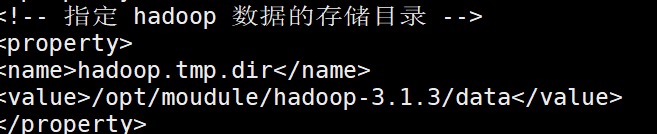
find the HDFS data storage path in the configuration file:

delete $Hadoop from all nodes_ Home%/data/DFs/data/current
then restart the Hadoop cluster (turn off the security mode% hadoop_home% $bin/HDFS dfsadmin – safemode leave)
you can also see that the data has been deleted on the web side,
the landlord found that there are still previous data directories, but the content has been lost
you need to delete these damaged data blocks as well
execute HDFS fsck

View the data block of the mission

hdfs fsck

-Delete deletes a damaged data block

Then upload the data again and execute it again.

“2003” error reported by sqlyog for Linux remote connection solution

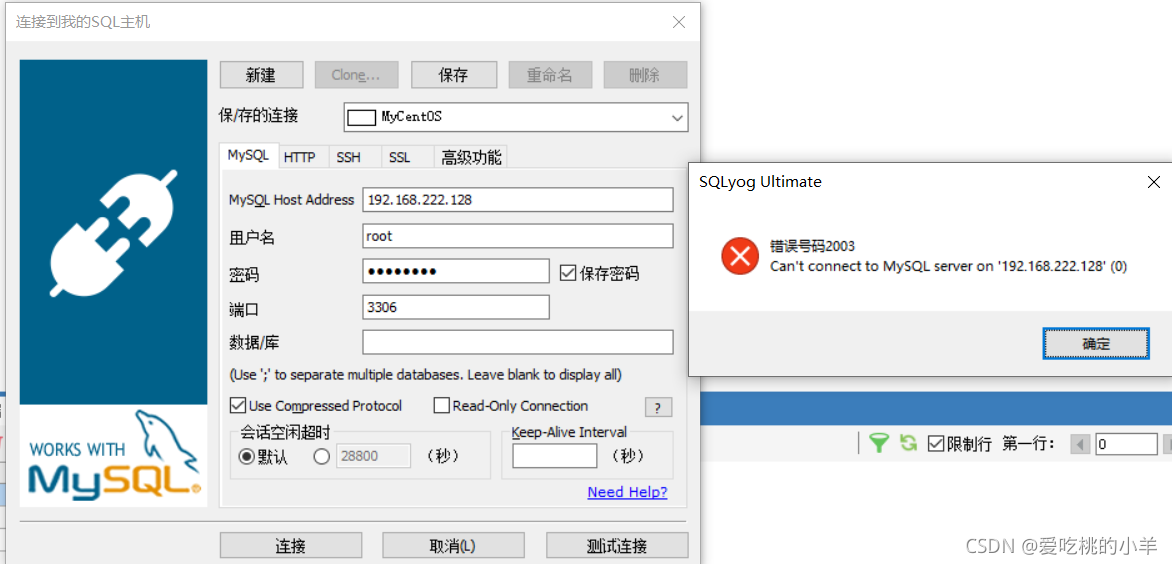
Just now xsell tried to connect to the database, but it couldn’t do anything. The error is reported: 2003, as shown in the following figure:


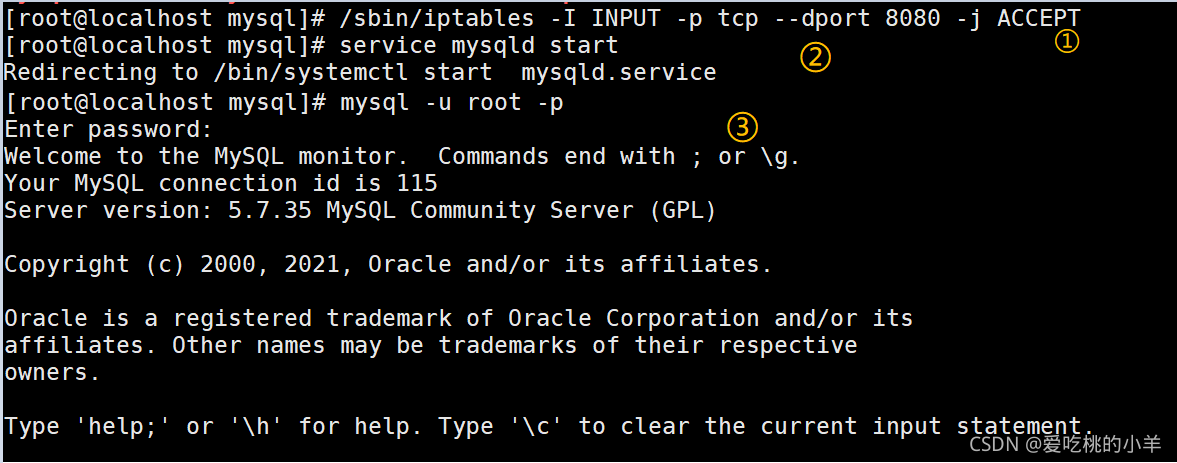
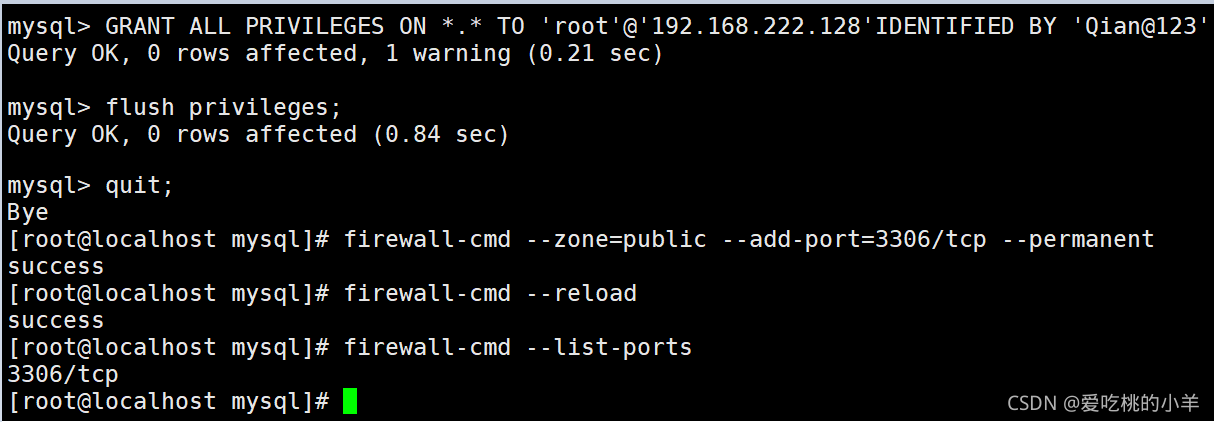
In xshell   ①   After closing the Linux Firewall   ② Start MySQL service   ③   After logging in with root, you need to authorize root, as shown in the figure below.


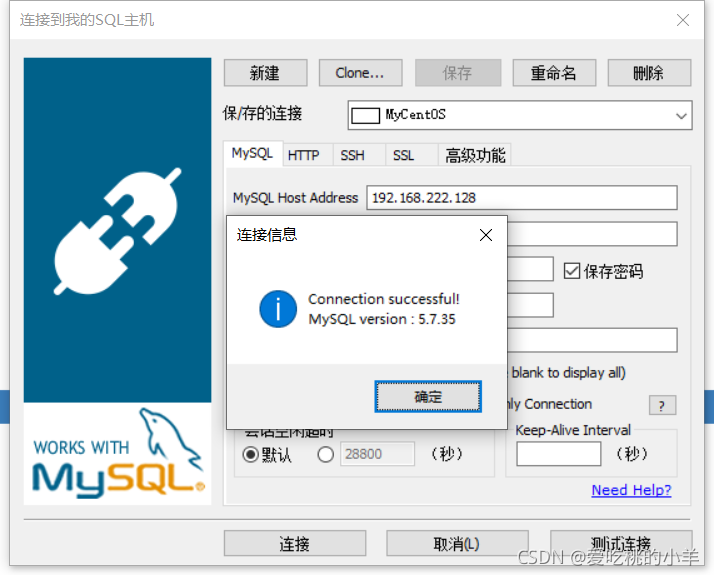
  Then it succeeded!