Solution:
you need to add the attribute type = “module” on the script tag
<script type="module">
	import {name} from './js'
	console.log(name)
</script>
Solution:
you need to add the attribute type = “module” on the script tag
<script type="module">
import {name} from './js'
console.log(name)
</script>
When you clone a Vue project from the open source platform, it is reported that the corresponding module cannot be found after logging in.
After searching a lot, it was finally solved.
export const loadView = (view) => {
  return () => import(`@/views/${view}`)
}
Change to the following
export const loadView = (view) => {
  return (resolve) => require([`@/views/${view}`], resolve)
}
It can be solved.
Cause: there is a problem with the webpack version. Dynamic import in webpack 4 does not support variable mode
The project can be seen in the elephant template.
I was writing the latest project of vue3.0. Once I deleted the node_modules package and reinstalled it, the terminal appeared Error: PostCSS plugin autoprefixer requires PostCSS 8.
Solution: set autoprefixer to 9.0.0:
"autoprefixer": "9.0.0",Recently, a new table has been added to the flash project, but an error is reported when executing flash DB migrate, as shown in the following figure:

Google around the Internet and finally know the problem:
although the migration directory in the project has been deleted, the version information has been saved in the database. Yes, this is the table – alembic_ version
So all you have to do is delete the version record of this table:
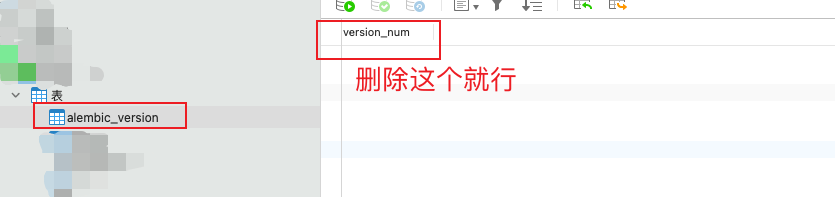
After deletion, execute flash DB migrate again, no error is reported, and the table is generated normally ~

Pure dry goods.
Direct cause: problems caused by concurrent read/write of map. The source of your problem must be among the following reasons.
catalogue
Reason 1: abnormal loading and unlocking
Reason 2: adding unlock code looks normal
Reason 3: incomplete locking
Reason 4: the same lock is not added to the map
Reason 1: abnormal loading and unlocking
The code is not written rigorously, the lock is not unlocked, and a single closed loop is not formed
solution: if a closed loop is formed, there must be a solution
Reason 2: adding unlock code looks normal
In fact, the internal code of the lock is lonely. The map operation is not within the scope of the lock. The (read and write together) or the same map (same address) is used with the external code. The lock does not play a practical role
Solution: transfer the map data without using the old map, generate a new map between locking and unlocking,
transfer the data to the new map (or other data structures), and then return to the new map
Or
Just adjust the code position
Reason 3: incomplete locking
Only the goroutine that writes the map is unlocked, but the goroutine that reads the map is not or only goroutine reading map is unlocked, but goroutine writing is not or unlocked
Reason 4: the same lock is not added to the map
For example: for a map, there are two goroutines for reading the map and two goroutines for writing the map. The four are numbered 1,2,3,4. The first three use mu1 and the last one uses mu2, which will cause the error.
Warm tips:
the same lock can act on multiple maps, but the same map cannot have two locks.
Project environment
Vue project
Cause of problem
The number of file monitoring is too large and the system limits it
Modify {etc/sysctl.d
fs.inotify.max_user_watches = 524288Apply changes
sudo sysctl -p --systemDocker inherits some setting files on the host. In order to prevent global impact, the above files will be set to read only in docker. Therefore, you need to change the above configuration on the host. After the host changes, docker automatically inherits.
Description:
The notebook of win10 system is remotely connected to the win10 workstation of the office, and then the win10 workstation is used to submit tasks to the cluster server. At this time, you can edit bash directly in the Linux environment of the cluster server The SH file cannot be run normally. If you use VIM to open the file and edit it again, the error will be prompted as follows:
batch: error: Batch script contains DOS line breaks (\r\n)
sbatch: error: instead of expected UNIX line breaks (\n)
In this case, use vscode to bash The SH file can be changed from CRLF to LF to solve the problem.
Problem description
When installing tableau desktop, the following errors may occur:
0x80070643 fatal error during installation
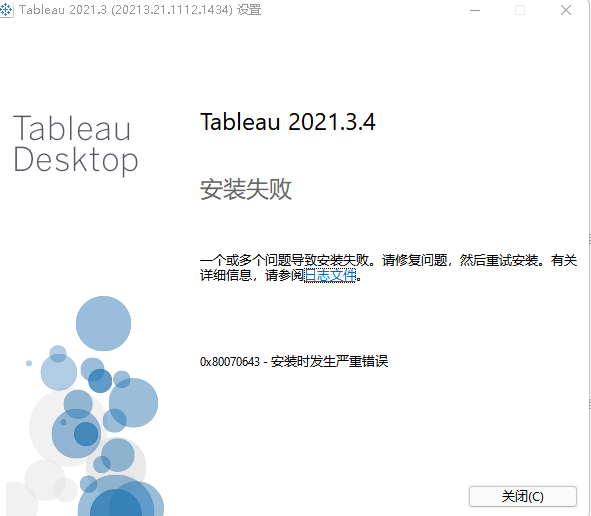
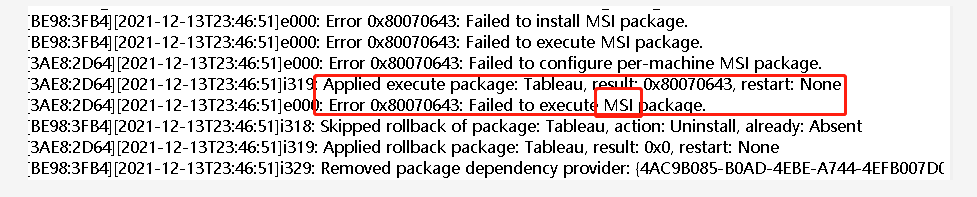
The error log is as follows:
in addition, the following errors can be found in the log:
Error 0x80070643: unable to execute MSI package
reason
Required installation components failed to start
Please note that error 0x80070643 is an error of Microsoft
.
Solution:
1. In windows, navigate to control panel > “Programs and features >”, Locate the visual c + + redistributable package shown in the setup file. For example, tableau desktop 2018.2 3 installation procedure Exe file contains 2013 and 2014 x64 Visual C + + redistributable component packages (as well as. MSI installer and some Database Driver Installer files of tableau desktop)
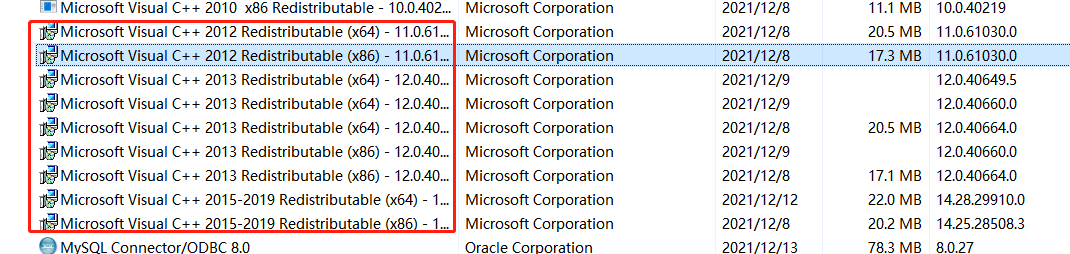
2. If not, go to the Microsoft official website to download
download link: https://www.microsoft.com/zh-cn/download/confirmation.aspx?id=53587
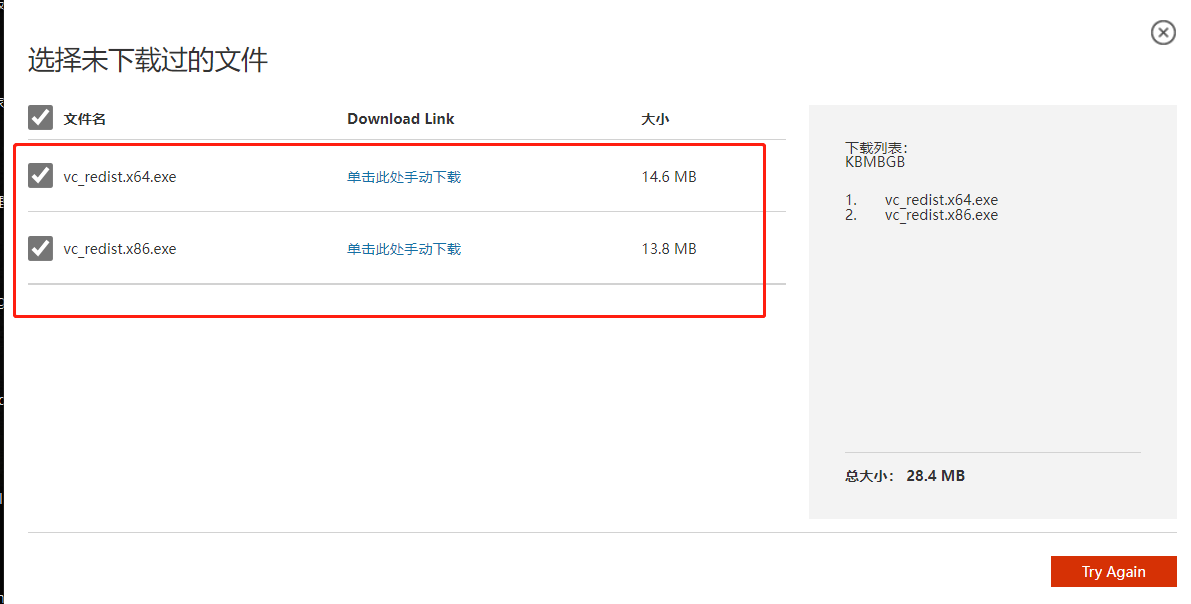
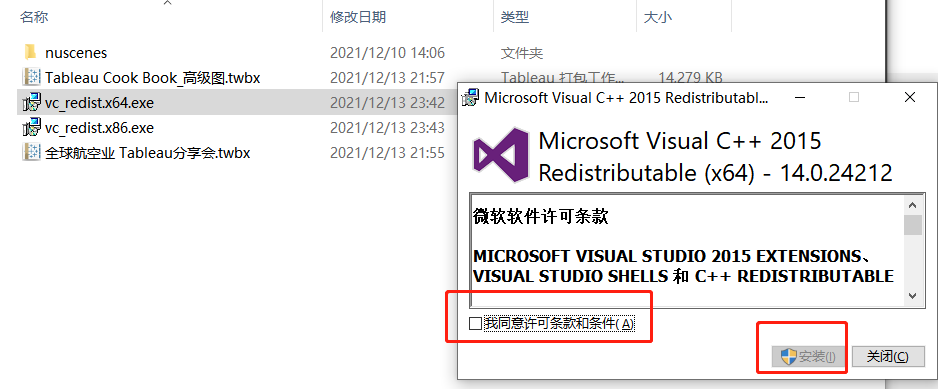
3. Just download and install
run the installer from tableau desktop Exe file, and then run tableau desktop MSI installer
Environmental description
System: centos7 (3.10.0)
Driver version: 00014996-rtl8192eu_linux_v5.6.3.1_34030_COEX20171113-0047.20190613.zip
Network card: Realtek rtl8192eu
Error log
rtl8192EU_WiFi_linux_v5.6.3.1_34030.20190613_COEX20171113-0047/os_dep/linux/ioctl_cfg80211.c:1141:45: error: ‘struct wireless_dev’ has no member named ‘sme_state’
   RTW_INFO("pwdev->sme_state(b)=%d\n", pwdev->sme_state);
                                             ^

rtl8192EU_WiFi_linux_v5.6.3.1_34030.20190613_COEX20171113-0047/os_dep/linux/ioctl_cfg80211.c:1152:45: error: ‘struct wireless_dev’ has no member named ‘sme_state’
   RTW_INFO("pwdev->sme_state(a)=%d\n", pwdev->sme_state);
                                             ^

rtl8192EU_WiFi_linux_v5.6.3.1_34030.20190613_COEX20171113-0047/os_dep/linux/ioctl_cfg80211.c:1207:45: error: ‘struct wireless_dev’ has no member named ‘sme_state’
   RTW_INFO("pwdev->sme_state(b)=%d\n", pwdev->sme_state);
                                             ^

/home/w1206/RTL8192EU_linux_v5.6.3.1_34030_COEX20171113-0047.20190613/driver/rtl8192EU_WiFi_linux_v5.6.3.1_34030.20190613_COEX20171113-0047/os_dep/linux/ioctl_cfg80211.c:1209:12: error: ‘struct wireless_dev’ has no member named ‘sme_state’
   if (pwdev->sme_state == CFG80211_SME_CONNECTING) {
            ^
/home/w1206/RTL8192EU_linux_v5.6.3.1_34030_COEX20171113-0047.20190613/driver/rtl8192EU_WiFi_linux_v5.6.3.1_34030.20190613_COEX20171113-0047/os_dep/linux/ioctl_cfg80211.c:1209:27: error: ‘CFG80211_SME_CONNECTING’ undeclared (first use in this function)
   if (pwdev->sme_state == CFG80211_SME_CONNECTING) {
                           ^
/home/w1206/RTL8192EU_linux_v5.6.3.1_34030_COEX20171113-0047.20190613/driver/rtl8192EU_WiFi_linux_v5.6.3.1_34030.20190613_COEX20171113-0047/os_dep/linux/ioctl_cfg80211.c:1213:19: error: ‘struct wireless_dev’ has no member named ‘sme_state’
   } else if (pwdev->sme_state == CFG80211_SME_CONNECTED) {
                   ^
/home/w1206/RTL8192EU_linux_v5.6.3.1_34030_COEX20171113-0047.20190613/driver/rtl8192EU_WiFi_linux_v5.6.3.1_34030.20190613_COEX20171113-0047/os_dep/linux/ioctl_cfg80211.c:1213:34: error: ‘CFG80211_SME_CONNECTED’ undeclared (first use in this function)
   } else if (pwdev->sme_state == CFG80211_SME_CONNECTED) {
^Solution:
Modify IOCTL_cfg80211.c
 	} else {
-		#if LINUX_VERSION_CODE < KERNEL_VERSION(3, 11, 0) || defined(COMPAT_KERNEL_RELEASE)
+		#if LINUX_VERSION_CODE < KERNEL_VERSION(3, 10, 0) || defined(COMPAT_KERNEL_RELEASE) //change by wellnw 20211213
 		RTW_INFO("pwdev->sme_state(b)=%d\n", pwdev->sme_state);
 		#endif

@@ -1148,7 +1158,7 @@
 				, pmlmepriv->assoc_rsp + sizeof(struct rtw_ieee80211_hdr_3addr) + 6
 				, pmlmepriv->assoc_rsp_len - sizeof(struct rtw_ieee80211_hdr_3addr) - 6
 				, WLAN_STATUS_SUCCESS, GFP_ATOMIC);
-		#if LINUX_VERSION_CODE < KERNEL_VERSION(3, 11, 0) || defined(COMPAT_KERNEL_RELEASE)
+		#if LINUX_VERSION_CODE < KERNEL_VERSION(3, 10, 0) || defined(COMPAT_KERNEL_RELEASE)//change by wellnw 20211213
 		RTW_INFO("pwdev->sme_state(a)=%d\n", pwdev->sme_state);
 		#endif
 	}
@@ -1203,7 +1213,7 @@
 	_enter_critical_bh(&pwdev_priv->connect_req_lock, &irqL);

 	if (padapter->ndev_unregistering || !rtw_wdev_not_indic_disco(pwdev_priv)) {
-		#if LINUX_VERSION_CODE < KERNEL_VERSION(3, 11, 0) || defined(COMPAT_KERNEL_RELEASE)
+		#if LINUX_VERSION_CODE < KERNEL_VERSION(3, 10, 0) || defined(COMPAT_KERNEL_RELEASE)//change by wellnw 20211213
 		RTW_INFO("pwdev->sme_state(b)=%d\n", pwdev->sme_state);

 		if (pwdev->sme_state == CFG80211_SME_CONNECTING) {
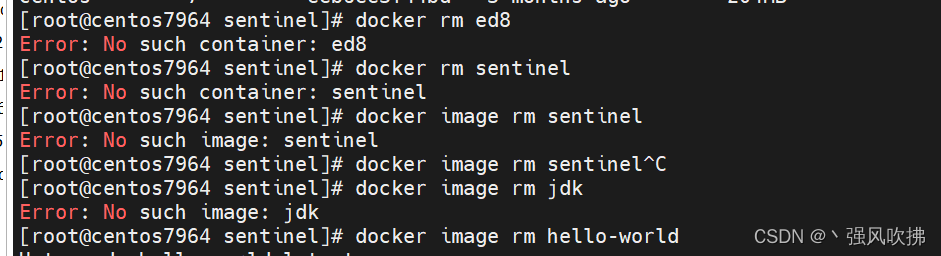
@@ -1217,6 +1227,7 @@The docker image cannot be deleted. If you view the image through docker images, it clearly exists, but it cannot be deleted.
Deletion prompt: error: no such image: XXXXXXXX
The specific screenshots are as follows:
Problem solving:
get into
cd /var/lib/docker/image/overlay2/imagedb/content/sha256
This directory is all the image files in docker
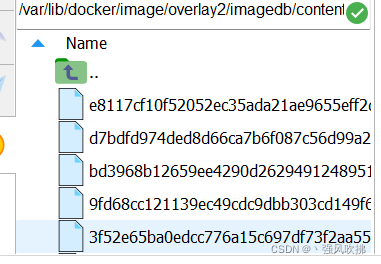
Which to delete? Don’t panic, image ID in docker images can determine the image file.
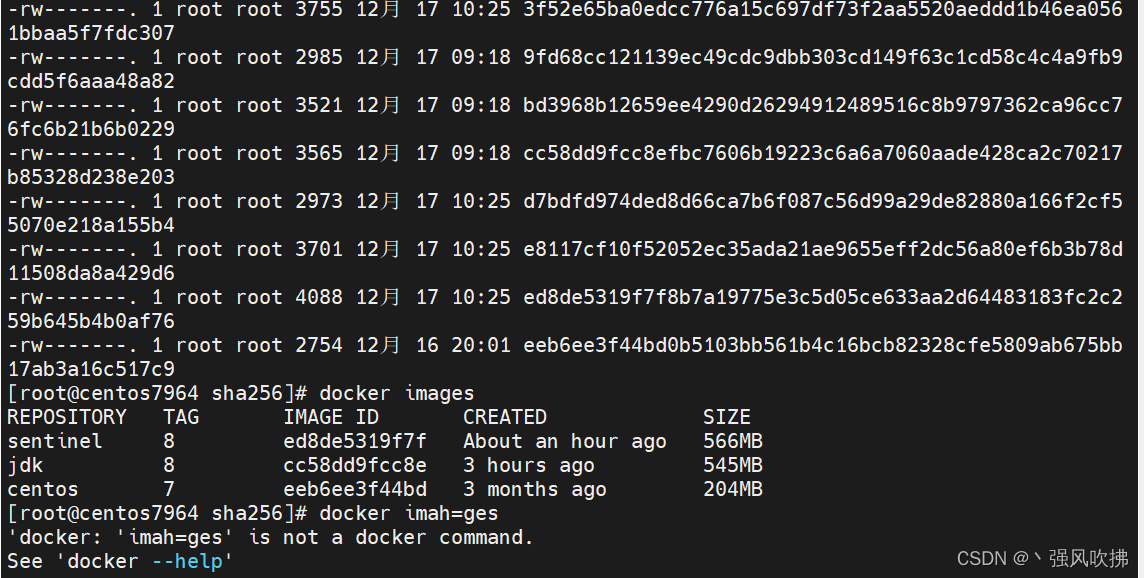
Delete the file after confirmation: RM -rf + file name
After deletion, there is no in the docker images list.
After nodemon is installed, the data is updated,
Instead, an error was reported.
I tried to search for a solution, but I couldn’t solve it,
Tell me about my own operation,
Finally, it is handled:
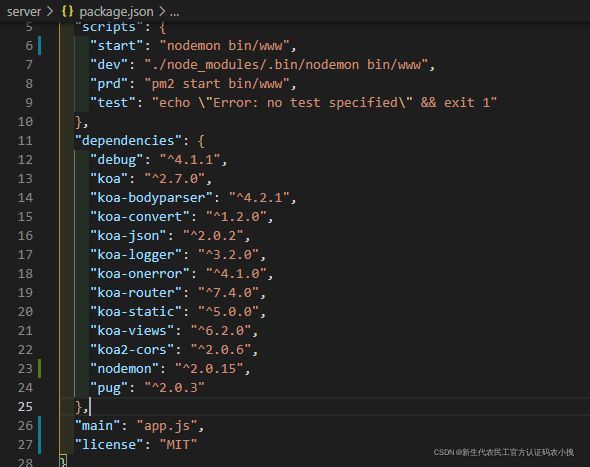
Main here I have a look. It turned into index.js
Now it’s changed to app.js, that is, the background entry file.
Then it’s all right.
Solution: Under the SBIN folder, start DFS SH add the following (as do the stop and yarn commands)
HDFS_DATANODE_USER=root
HADOOP_SECURE_DN_USER=hdfs
HDFS_NAMENODE_USER=root
HDFS_SECONDARYNAMENODE_USER=root
HDFS_JOURNALNODE_USER=root
HDFS_ZKFC_USER=root