Solution: Import this package in polyfills. Ts file.
import ‘core-js/es7/reflect’;
When installing p3C plug-ins in eclipse, I will not elaborate here. This is a plug-in developed by Ali’s internal code standards that can help developers better regulate the code. If necessary, it can be installed. In addition ali Java development manual you can also read, the specification of the purple code style. Okay, theme, the following error will be reported when installing the plug-in:
An error occurred while collecting items to be installed
session context was:(profile=epp.package.jee, phase=org.eclipse.equinox.internal.p2.engine.phases.Collect, operand=, action=).
No repository found containing: osgi.bundle,org.aspectj.runtime.source,1.7.0.20120507134200
No repository found containing: osgi.bundle,org.eclipse.contribution.weaving.jdt.source,2.2.0.e36x-20120507-1400
No repository found containing: org.eclipse.update.feature,org.eclipse.contribution.weaving.source,2.2.0.e36x-20120507-1400
No repository found containing: osgi.bundle,org.eclipse.contribution.xref.core.source,2.2.0.e36x-20120507-1400
No repository found containing: org.eclipse.update.feature,org.eclipse.contribution.xref.source,2.2.0.e36x-20120507-1400
No repository found containing: osgi.bundle,org.eclipse.contribution.xref.ui.source,2.2.0.e36x-20120507-1400
No repository found containing: osgi.bundle,org.eclipse.net4j.jms.api,3.0.0.v20110215-1551
No repository found containing: osgi.bundle,org.springframework.roo.wrapping.protobuf-java-lite,2.3.0.0001
This is because some libraries can not connect, resulting in online installation failed, just add the url address of the library where the installation is.
The specific steps are as follows:
The above errors, for example, add the following path:
name: eclipse
location:https://www.eclipse.org/ajdt/downloads/
Therefore, if you encounter similar errors later, you can first look at what library is missing, and then add the corresponding library address.
UCLASS()
class SECTION1_API ASUsableActor : public AActor
{
GENERATED_BODY()
public:
};
UCLASS()
class SURVIVALGAME_API ASUsableActor : public AActor
{
GENERATED_UCLASS_BODY()
public:
};
F12 jumps to the declaration file for both macros
#define GENERATED_BODY() \
PRAGMA_DISABLE_DEPRECATION_WARNINGS \
public: \
ASUsableActor_RPC_WRAPPERS_NO_PURE_DECLS \
ASUsableActor_CALLBACK_WRAPPERS \
ASUsableActor_INCLASS_NO_PURE_DECLS \
ASUsableActor_ENHANCED_CONSTRUCTORS \
private: \
PRAGMA_POP
GENERATED_BODY() will be replaced by a series of macros that replace the bottommost member with private: that is, after GENERATED_BODY() without significantly changing the member’s access mode, it will be private
#define GENERATED_UCLASS_BODY() \
PRAGMA_DISABLE_DEPRECATION_WARNINGS \
public: \
ASUsableActor_RPC_WRAPPERS \
ASUsableActor_CALLBACK_WRAPPERS \
ASUsableActor_INCLASS \
ASUsableActor_STANDARD_CONSTRUCTORS \
public: \
PRAGMA_POP
and the member variable after GENERATED_UCLASS_BODY() is public.
#define ASUsableActor_RPC_WRAPPERS
#define ASUsableActor_CALLBACK_WRAPPERS
these two are empty macros, in C/C++ hollow macros will be replaced by Spaces mostly used to indicate comments
The two non-null macros in GENERATED_UCLASS_BODY() are declared as
#define ASUsableActor_INCLASS \
private: \
static void StaticRegisterNativesASUsableActor(); \
friend SECTION1_API class UClass* Z_Construct_UClass_ASUsableActor(); \
public: \
DECLARE_CLASS(ASUsableActor, AActor, COMPILED_IN_FLAGS(0), 0, Section1, NO_API) \
DECLARE_SERIALIZER(ASUsableActor) \
/** Indicates whether the class is compiled into the engine */ enum {IsIntrinsic=COMPILED_IN_INTRINSIC}; \
UObject* _getUObject() const { return const_cast<ASUsableActor*>(this); }
The main purpose of these lines is to declare some member methods for the class
#define ASUsableActor_STANDARD_CONSTRUCTORS \
/** Standard constructor, called after all reflected properties have been initialized */ \
NO_API ASUsableActor(const FObjectInitializer& ObjectInitializer); \
DEFINE_DEFAULT_OBJECT_INITIALIZER_CONSTRUCTOR_CALL(ASUsableActor) \
private: \
/** Private copy-constructor, should never be used */ \
NO_API ASUsableActor(const ASUsableActor& InCopy); \
public:
Here you can see that a public constructor and a private copy constructor are declared, with the public constructor taking a reference constant for FObjectInitializer. The copy constructor is declared private, indicating that the copy constructor is not available
The following two are non-null macro declarations referenced in GENERATED_BODY()
#define ASUsableActor_RPC_WRAPPERS_NO_PURE_DECLS \
static inline void StaticChecks_Implementation_Validate() \
{ \
}
#define ASUsableActor_INCLASS_NO_PURE_DECLS \
private: \
static void StaticRegisterNativesASUsableActor(); \
friend SECTION1_API class UClass* Z_Construct_UClass_ASUsableActor(); \
public: \
DECLARE_CLASS(ASUsableActor, AActor, COMPILED_IN_FLAGS(0), 0, Section1, NO_API) \
DECLARE_SERIALIZER(ASUsableActor) \
/** Indicates whether the class is compiled into the engine */ enum {IsIntrinsic=COMPILED_IN_INTRINSIC}; \
UObject* _getUObject() const { return const_cast<ASUsableActor*>(this); }
#define ASUsableActor_ENHANCED_CONSTRUCTORS \
private: \
/** Private copy-constructor, should never be used */ \
NO_API ASUsableActor(const ASUsableActor& InCopy); \
public: \
DEFINE_DEFAULT_CONSTRUCTOR_CALL(ASUsableActor)
DEFINE_DEFAULT_CONSTRUCTOR_CALL didn’t track where and how to declare it in VS, so the literal definition is to define the default constructor, which is the basic constructor.
Also the copy constructor is not available
From the above analysis, you can think of GENERATED_BODY() as generating the default constructor for us, and GENERATED_UCLASS_BODY() as generating the constructor with the specified parameter type for us
the solution:
First, add the macro package
\usepackage{epstopdf}
Second, compile from the command line
pdflatex –shell-escape template.tex
To complete.
View hard disk usage df-h
view hard disk information: fdisk-l
eg:
sudo sshfs-o allow_other-o reconnect-o cache=yes www@ip:/ destination file/local file
or
sudo sshfs -o allow_other -o nonempty -o reconnect -o cache=yes www@ip:/data/wwwroot/default/test /home/www/test/uploads
If there is a permission question mark :
close hanging in eg: sudo umount./inquiry
And open;
View hanging information: cat /etc/mtab
running SSHFS: ps aux | grep SSHFS
angular.module('myApp', [])
.controller('MyController', ['myService', function (myService) {
// Do something with myService
}]);
[$Injector: unPR] Unknown Provider [injector: unPR] Unknown provider. If you find an undefined dependency, first define the dependency in advance.
angular.module('myApp', [])
.service('myService', function () { /* ... */ })
.controller('MyController', ['myService', function (myService) {
// Do something with myService
}]);
2. Reuse of Angular.module
angular.module('myModule', [])
.service('myCoolService', function () { /* ... */ });
angular.module('myModule', [])
// myModule has already been created! This is not what you want!
.directive('myDirective', ['myCoolService', function (myCoolService) {
// This directive definition throws unknown provider, because myCoolService
// has been destroyed.
}]);
Repeated use of Angular. Module (‘myModule’, []) in the above code causes Angular to redefine the myModule module, causing an error. The angular.module(‘myModule’, []) syntax is usually used to define a module again. To avoid this problem, use angular.module(‘myModule’) or a variable instead.
angular.module('myModule', []);
.service('myCoolService', function () { /* ... */ });
angular.module('myModule')
.directive('myDirective', ['myCoolService', function (myCoolService) {
// This directive definition does not throw unknown provider.
}]);
or
var app = angular.module('myModule', []);
app.service('myCoolService', function () { /* ... */ });
app.directive('myDirective', ['myCoolService', function (myCoolService) {
// This directive definition does not throw unknown provider.
}]);
3. Inject one Controller as a dependency into another controller
angular.module('myModule', [])
.controller('MyFirstController', function() { /* ... */ })
.controller('MySecondController', ['MyFirstController', function(MyFirstController) {
// This controller throws an unknown provider error because
// MyFirstController cannot be injected.
}]);
In fact, if you want to instantiate controller, you can use the $Controller service (which will be updated later in the blog).
Inject $Scope into a component that is not a Controller or directive
angular.module('myModule', [])
.service('MyController', ['$scope', function($scope) {
// This controller throws an unknown provider error because
// a scope object cannot be injected into a service.
}]);
When this happens, it is also easy to check, just keep in mind that only controller and directive can inject $Scope as a dependency.
5. Error using Angular compressed version
You would use ngStrictDi
Well, I hope this article can help you, in case of this problem do not panic!
Have a Beagle ™ 480 USB Protocol Analyzer Protocol analysis tool
(https://www.totalphase.com/media/datasheet/TP_Beagle_USB_480_Protocol_Analyzer-Datasheet.pdf), you can grab the data on the USB bus. Data Center Software can be used to capture and analyze Data on the USB bus.
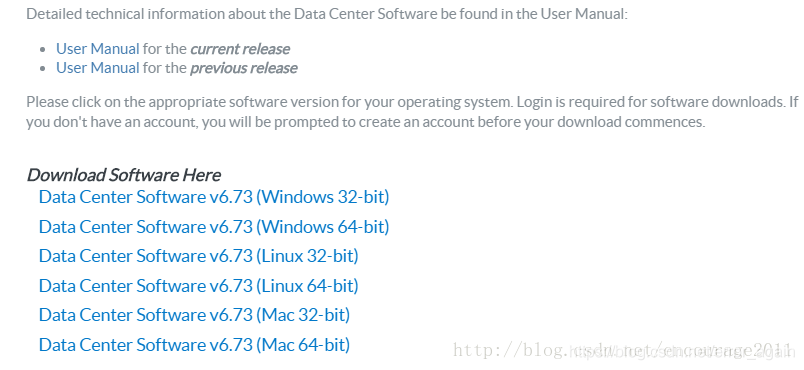
Software Download address
https://www.totalphase.com/products/data-center/
according to the need to choose which one to download. This software does not require installation and can be opened directly.

USB Drive Download
Windows:https://www.totalphase.com/products/usb-drivers-windows/
Linux:https://www.totalphase.com/products/usb-drivers-linux/
The USB driver under Linux is based on Libusb, so there is no need to install, just copy the extracted 99-totalphase rules to /etc/udev/rules.d/ directory and update the udev rules.
For all products, the Linux driver is based on libusb and there is no need to install
any other drivers on the operating system. For information on access permissions,
refer to the datasheets and the hotplug or udev infrastructure under Linux.
Use of Data Center software
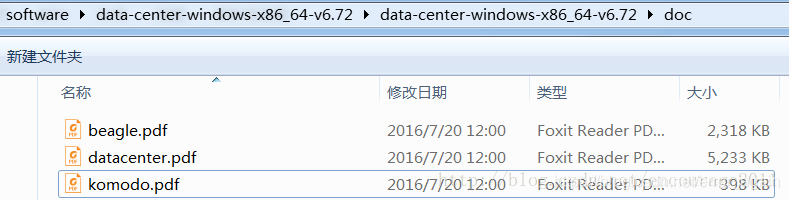
There is a doc/ directory in the directory of the software, which contains the usage instructions of Beagle, Datacenter and Komodo.

Beagle. PDF contains knowledge points related to USB protocol, I2C protocol and SPI protocol;
datacenter. PDF on the use of Data Center software, including capture, filter, trigger, etc.;
komodo. PDF looks like it is about usb-to-can.
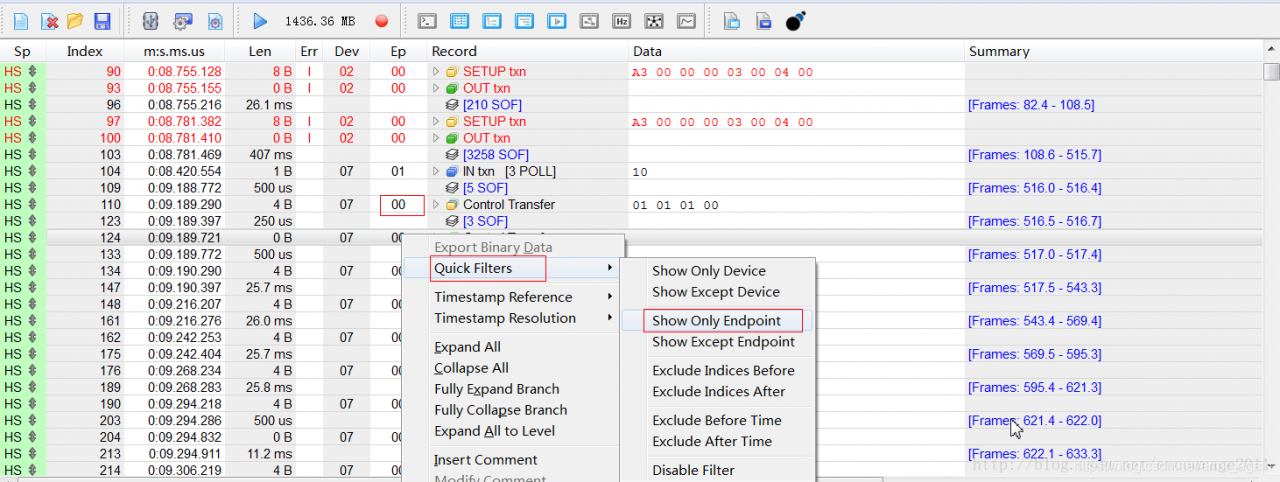
For example, if we want to see the enumeration process, we can quickly filter the data of other endpoints. If we Only want to keep the data of Endpoint 0, right click on the data panel to display the fast filtering option, in this case Show Only Endpoint. Of course, if you don’t want to Filter anything, click Disable Filter.

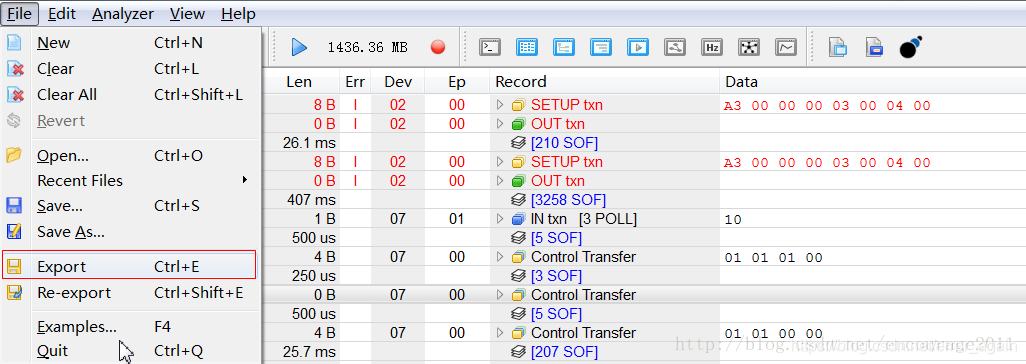
More importantly, if we know that an endpoint is transmitting audio files, we can display data for that endpoint only, filter out other endpoints, and finally File -> Export exports the data to a specific format, and the audio file is ready to play.

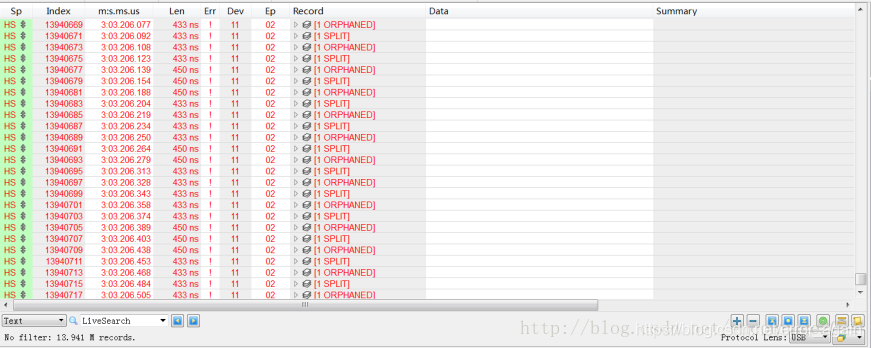
While fetching, there are always things that seem to be orphded-nanded-and SPLIT, as follows:

In the article below about the SPLIT and ORPHANED details:
https://www.totalphase.com/blog/2015/03/causes-split-orphaned-packets-beagle-usb-480-protocol-analyzer-captures-detects/
In summary:
SPLIT transfers are used by hosts to communicate with full-/low-speed devices through a high-speed hub. These transfers will have at least a Start SPLIT, and may include polling and handshaking as well.Orphaned packets can occur when a device is connected through a path that does not pass through the Beagle analyzer.
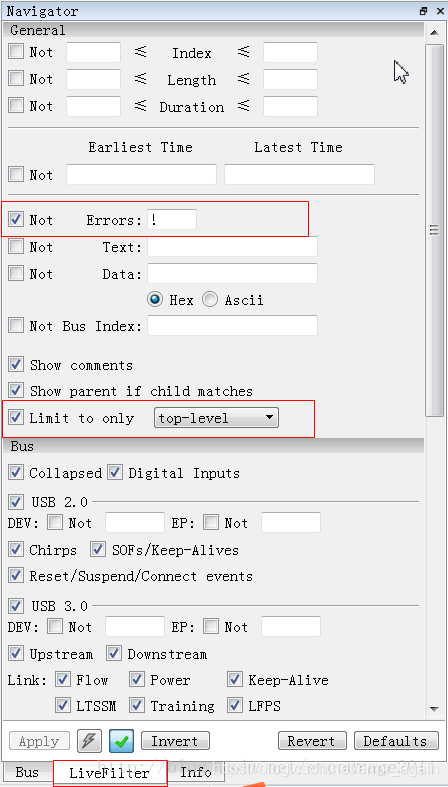
That is, at the time of the grab, there is another low-speed or full-speed device communicating on the USB bus, so SPILIT’s transfer occurs. Such warnings are perfectly normal. To get them out, I filtered the following in the LiveFilter panel:
Server Error: 0 x80048820
Server: ‘http://mail.services.live.com/DeltaSync_v2.0.0/Sync.aspx’
Windows Live Mail Error ID: 0 x80048820 I>
——————————
To log in to MSN, click on the top right corner “ inbox ” (maybe you don’t have to click, just log in to MSN).
The cause may be login MSN in different places, resulting in inconsistent status, only through MSN login again to eliminate this repetition.
Company: MSN, MailLive not installed, inbox display 100 mail.
Home: MSN+MailLive,MailLive has collected part of it
Reproduced in: https://www.cnblogs.com/rock_chen/archive/2010/11/02/1867512.html